Talented young directors, professional production teams, and above all, the interest of the domestic audience are creating a new face for Vietnamese cinema.
Over the past decade, Vietnamese cinema has undergone a dramatic transformation. From a film industry once struggling with the dilemma of market demand versus quality, many works have now reached international acclaim, leaving their mark at prestigious film festivals.
Talented young directors, professional production teams, and above all, the interest of the domestic audience are creating a new face for Vietnamese cinema.
However, for sustainable development, the Vietnamese film industry needs a solid foundation: a modern training system, supportive policies and mechanisms, international connectivity, and a sufficiently large and open domestic market. In the context of Vietnam's increasing proactive integration, organizing international film festivals within Vietnam, such as the Da Nang Asian Film Festival, along with cross-border co-production projects, is opening many new doors for the country's film industry.
A foundation built upon good film schools.
A film industry that wants to develop sustainably cannot do without a well-structured training system. In Vietnam in recent years, film training institutions have undergone many positive changes, from curriculum to organizational methods.
The most prominent institutions remain leading schools such as the Hanoi University of Theatre and Film, the Ho Chi Minh City University of Theatre and Film, the Academy of Journalism and Communication, and Van Lang University.
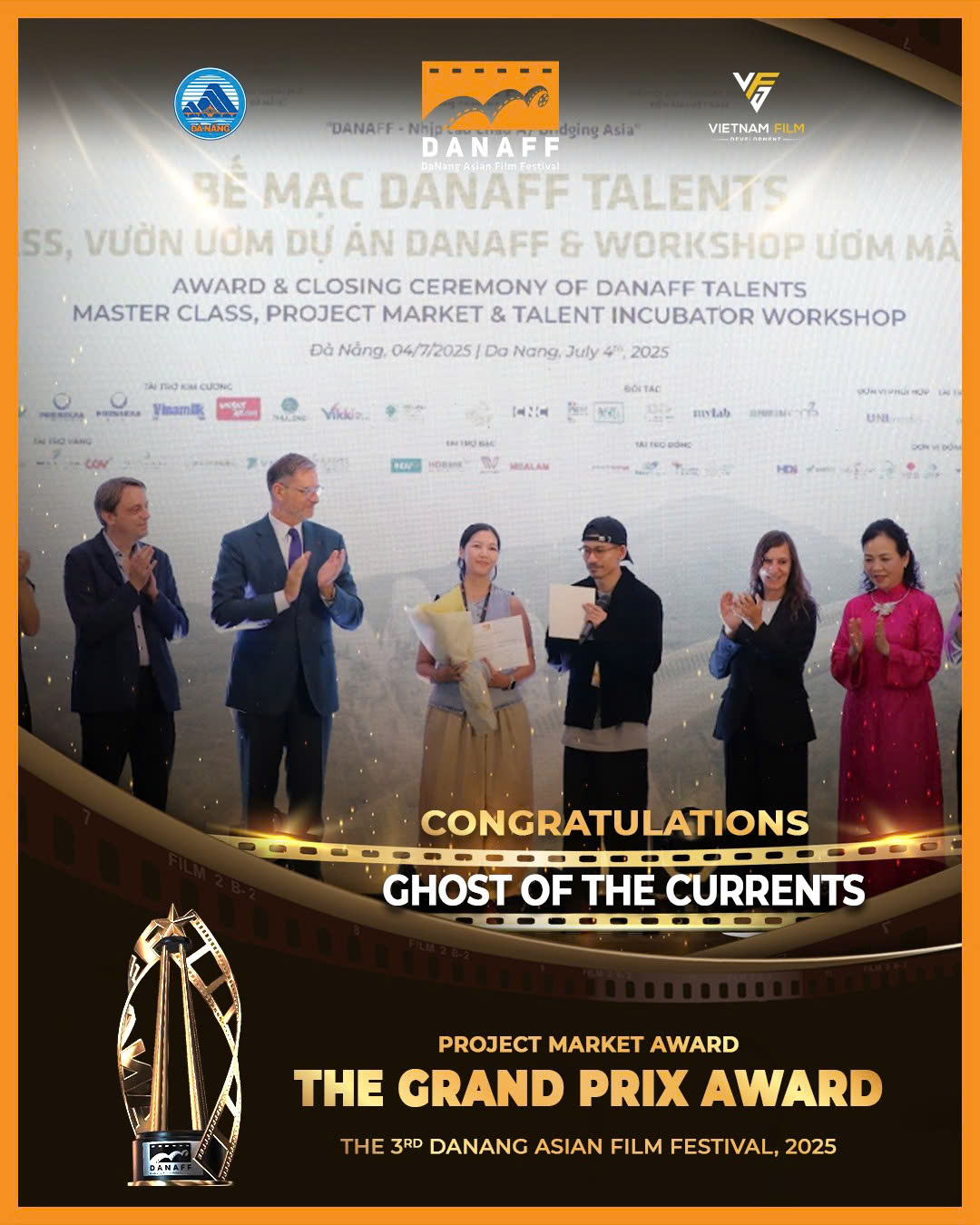
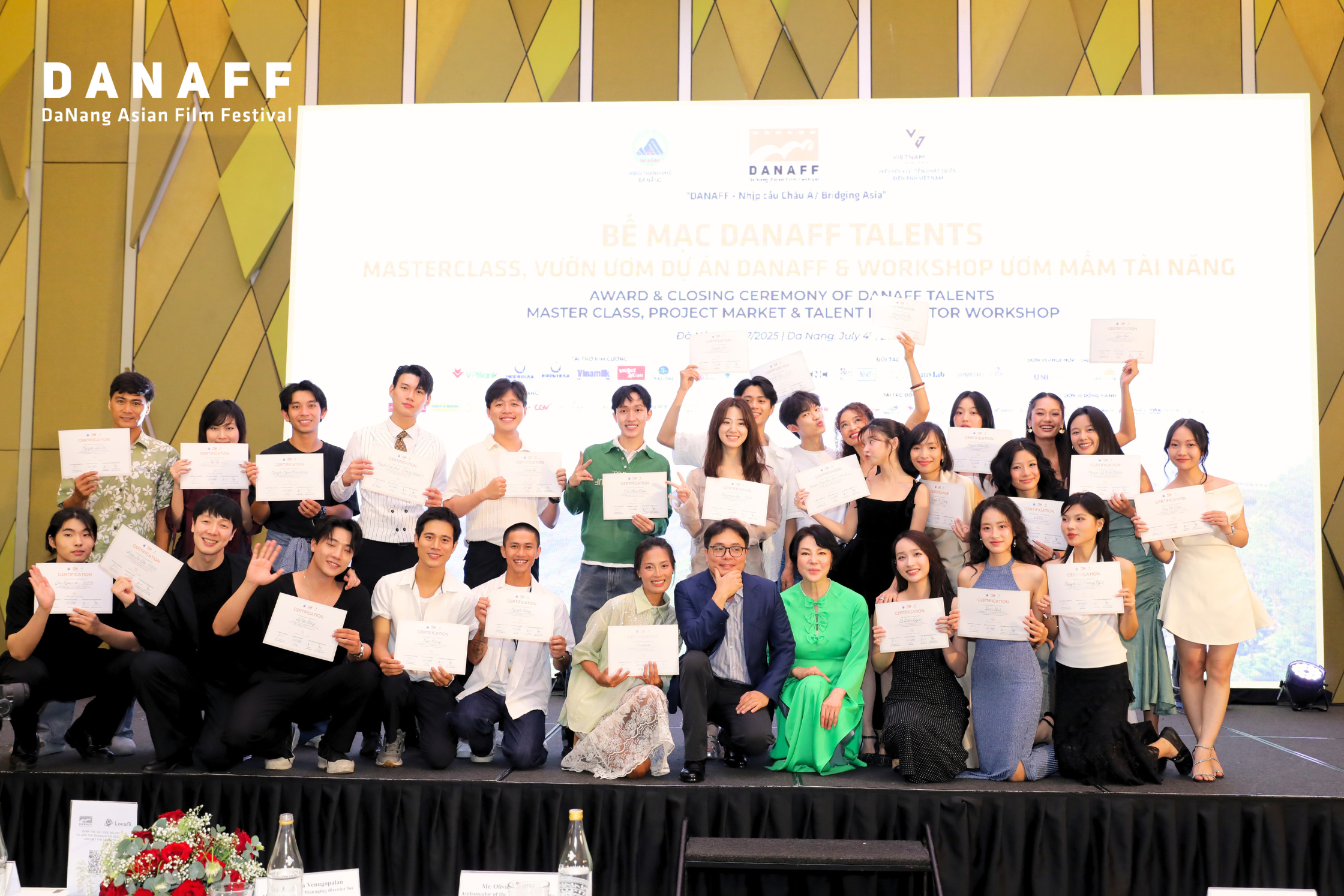
Closing & Award Ceremony of DANAFF Talents at the 3rd Da Nang Asian Film Festival
These schools not only train professionals in directing, screenwriting, cinematography, and film editing, but also expand into film production and media. Notably, some institutions have collaborated with international film schools to stay updated on modern filmmaking trends and build a more practical learning environment.
In addition, effective collaboration models between schools, businesses, and film studios have been successfully implemented by universities. Students' exposure to real-world production and internships on professional projects serve as crucial stepping stones for their career development.
The effectiveness of international collaborative projects not only impacts the students participating in the projects but also continues to influence subsequent cohorts through the young faculty members who also participate in these projects.
Director, Master Nguyen Hong Quan – Head of the Directing Department, Faculty of Cinematography, Hanoi University of Theatre and Film, shared: “International collaborative projects at the university all involve coordination, translation, and organization by full-time lecturers. Access to diverse teaching methods and production organization has given us practical experience in teaching and supporting students in subsequent courses on their cinematic journey.”
Thanks to professional training, many young Vietnamese directors have gradually made a name for themselves internationally, such as Phan Dang Di, Tran Thanh Huy, and Le Bao…
Not only feature films, but also short films by Vietnamese students are increasingly being selected to participate in major film festivals in Asia and Europe, instilling confidence in a new generation of filmmakers.
According to Associate Professor, Doctor, Meritorious Artist Phan Thi Bich Ha – Former Rector of the Ho Chi Minh City University of Theatre and Film, Head of the Faculty of Music, Theatre and Film – Van Lang University: “Building collaborative training projects can both discover and develop talent, solve the problem of human resources, and create long-term influence and development for the Vietnamese film industry.”
Along with digital technology, transnational classroom models, or online seminars and global workshops are gradually blurring geographical boundaries. If film schools in Vietnam are more proactive in exploiting this technology, we can design online courses with international experts and lecturers, share learning resources, and expand the creative space for students.”
The spirit of international cooperation
The key to integration cinema is a highly global field. Learning, cooperation, and international exchange are always factors that drive development in terms of technique, content, and artistic thinking. In Vietnam, the spirit of international cooperation in the film industry has been formed early on and has become increasingly deeper and broader in recent years.
Many co-production projects between Vietnam and countries such as South Korea, Japan, France, and Germany have contributed to creating high-quality films that have won numerous international awards.
Works such as "The Scent of Green Papaya" (Oscar nominated), "Father Carrying Son," "Hai Phuong," "Children in the Mist," and director Tran Thanh Huy's film "Rom" not only made a splash domestically but also received support from international film funds, directors, and screenwriters.
The premiere of the film "Love in Vietnam" at the Ariyana International Convention Center in Da Nang.
Notably, at the 3rd Da Nang Asian Film Festival in 2025, the film Love in Vietnam was screened, the first co-production film project between Vietnam and India, marking a new development in cultural cooperation between the two countries.
Directed by Indian filmmaker Rahhat Shah Kazmi, the film features many scenes shot in Da Nang city and other famous tourist destinations in Vietnam, creating a wonderful connection between cinema and tourism.
Government policies are increasingly supporting international cooperation in filmmaking. Many projects have been developed to support human resource training, script translation, organizing film exchange weeks, and inviting international filmmakers to choose Vietnam as a filming location, such as the case of "Kong: Skull Island," which created a huge media sensation and opened up many opportunities to promote the country's image.
According to producer and international project expert Chulsoo Charles Kim, a member of the Korea International Broadcasting Film Festival, Vietnam needs to continue expanding from bilateral cooperation (with South Korea and Hong Kong) to regional Southeast Asian linkages with training programs, labs, and production networks with countries such as Malaysia, Thailand, and the Philippines to become a production hub, not just a place for importing content.
According to him, Vietnam could co-produce television series with actors from Thailand, South Korea, and the Philippines, incorporating multinational cultural elements to create an attractive format for international platforms.
Strategic partnerships with platforms like Netflix, iQIYI, and VIU can boost the development of domestic cinema with the support of an international team. Vietnam is poised to become a film hub in Asia if these factors are effectively combined.
Film Festivals – A Launchpad for Vietnamese Cinema
Vietnam's hosting of international film festivals has created great opportunities for the development of the film industry. In Vietnam, many events have become meeting points for filmmakers, such as the Vietnam Film Festival, the Hanoi International Film Festival, and especially the 3rd Da Nang Asian Film Festival, which features many attractive activities and events.
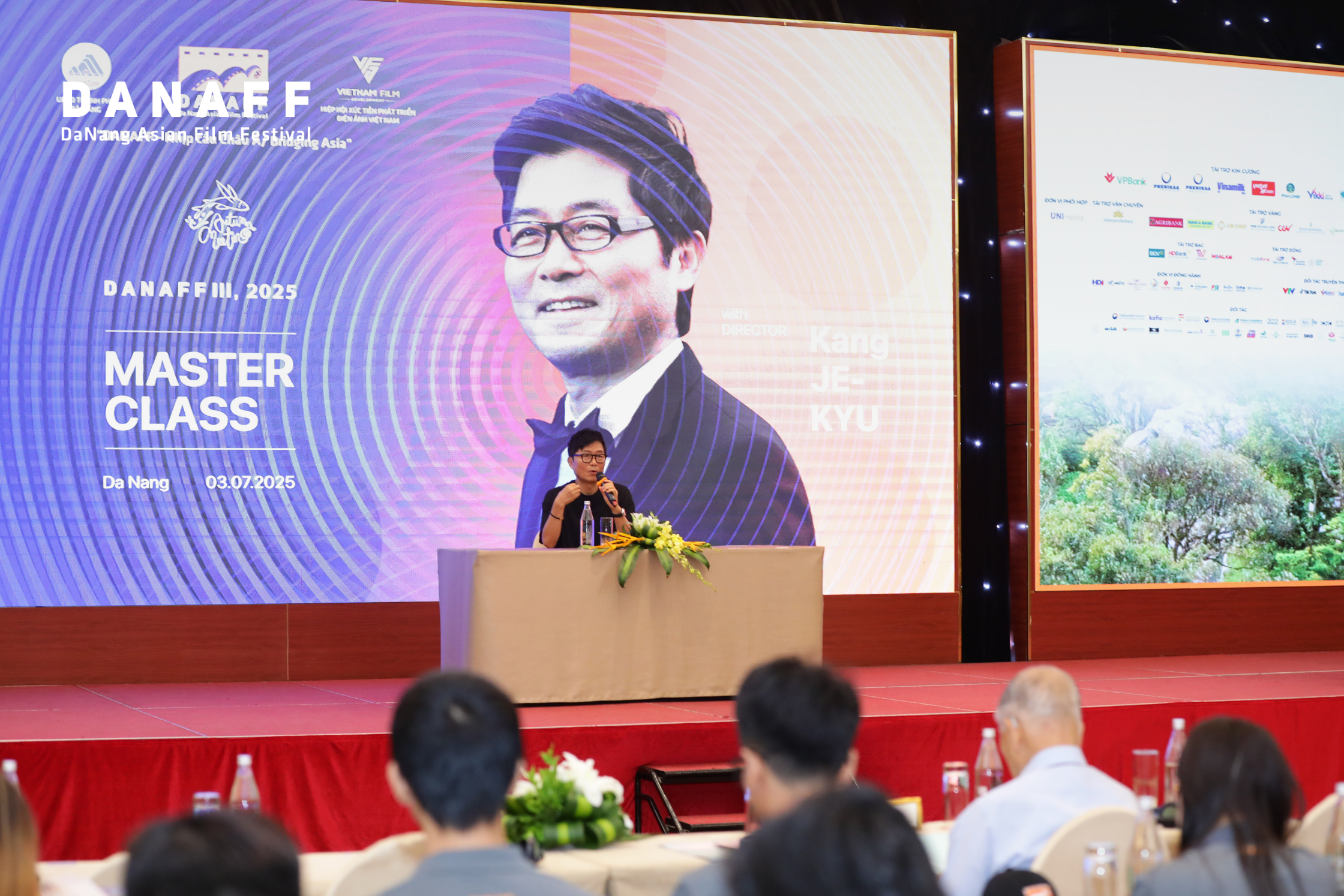
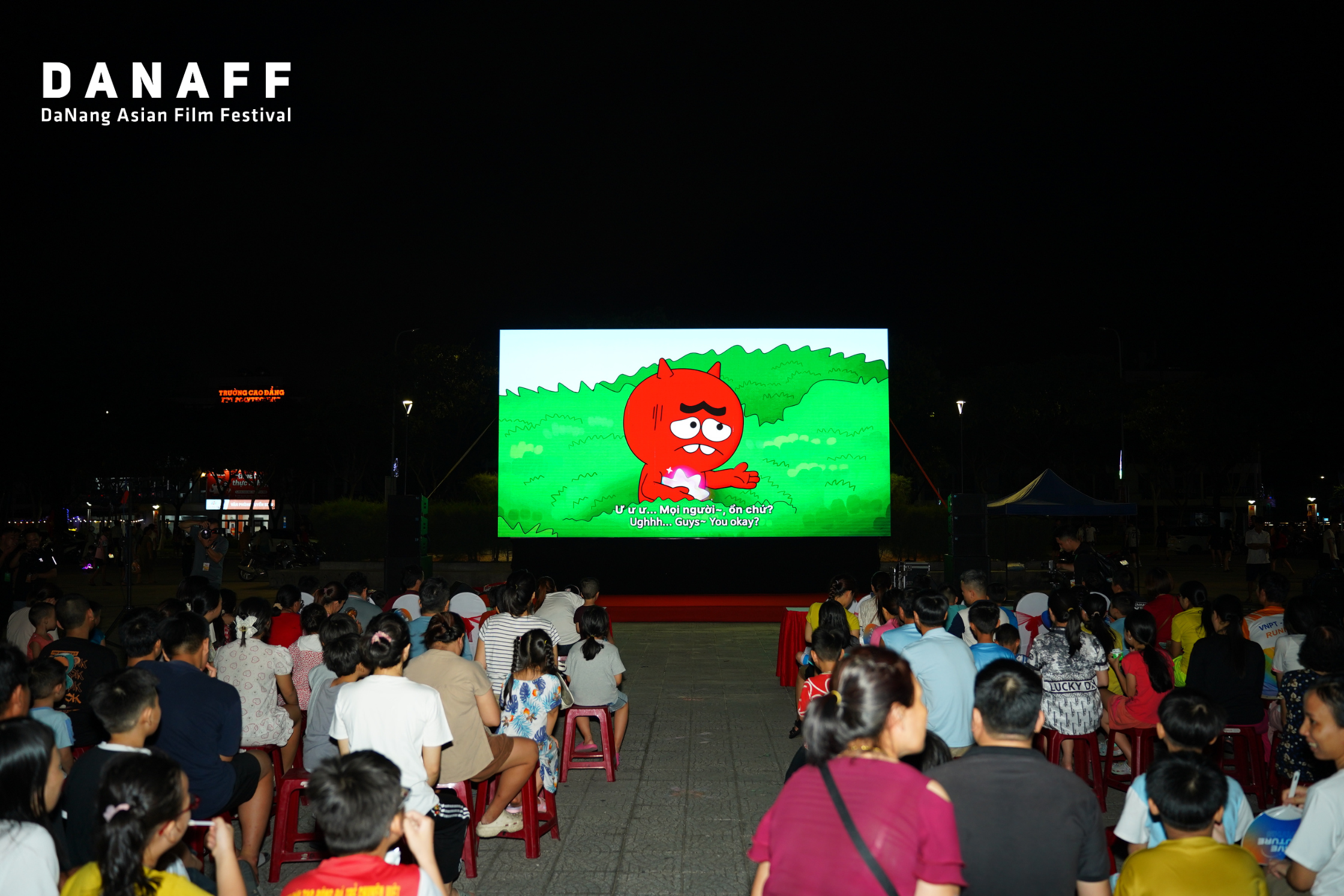
Beyond simply organizing events, the side activities of film festivals, such as seminars, panel discussions, outdoor film screenings, and talent development workshops and project incubators, have expanded the space for interaction between Vietnamese filmmakers and actors and their international counterparts.
At the 3rd Da Nang Asian Film Festival, more than 50 young talents from Vietnam, Japan, and South Korea were selected to participate in two acting classes, basic and advanced, over five consecutive days. The organizers hope that the 2025 talent nurturing workshop, with its in-depth, creative, and innovative training programs, will continue to be a launching pad for promising film talents in the future.
In particular, the film festival provides strong motivation for aspiring directors, film students, and independent filmmakers. When their works are selected for screening or participate in pitching sessions at the project incubator, opportunities for learning and career development open up accordingly.
These activities demonstrate that Vietnamese cinema is fully capable of reaching regional and global markets if it has a clear strategy and appropriate support resources.
Seize the opportunity, expand globally.
The opportunities for development in Vietnamese cinema are becoming increasingly clear, with a young workforce, greater emphasis on training facilities, a clear integration policy, and international film events taking place right here in Vietnam.
This is the right time for the film industry to proactively change, from creative thinking to production organization, from distribution models to promotional strategies. Strengthening international cooperation, improving the training environment, and expanding the playing field through film festivals are indispensable solutions.
With systematic investment, a spirit of continuous learning, and faith in the power of stories with a Vietnamese flavor, the Vietnamese film industry can certainly envision a bright future where cinematic works depicting the people and country of Vietnam will not only be present in domestic theaters but also stand shoulder to shoulder with world cinema, so that the voice of Vietnam will not only be present but also heard, empathized with, and shared on the global screen.