On March 15, 1953, President Ho Chi Minh signed a decree to establish the Vietnam Movie and Photography Enterprise, marking an important milestone for the national revolutionary film industry.
Hanoi, March 10 (VNA) - On March 15, 1953, President Ho Chi Minh signed a decree to establish the Vietnam Movie and Photography Enterprise, marking an important milestone for the national revolutionary film industry.
After 70 years of development, the national film industry has achieved significant accomplishments, making positive contributions to the cultural revitalization, enriching the spiritual life of people, and enhancing Vietnam’s position on the international stage.
However, in this new stage of development, industry experts believe that there is still much work to be done for Vietnamese cinema to truly “take off” and make breakthroughs to promote itself on the global arena.
Accompanying the national history
Deputy Minister of Culture, Sports and Tourism Ta Quang Dong affirmed that the Vietnamese revolutionary film industry has gone through a development process that has run parallel throughout the nation's history of struggle for national liberation, including two resistance wars, as well as the country's construction, innovation, and integration efforts.
Vietnamese cinema began to receive international recognition, demonstrated through a series of awards at the Moscow Film Festival for the documentary film “Nuoc ve Bac Hung Hai” (Water Returns to Bac Hung Hai) (1959), the Germany Leipzig Film Festival for “Nhung nguoi que huong toi” (My Homeland People) (1970) and “Luy Thep Vinh Linh” (Vinh Linh Steel Rampart) (1971).
Entering the period of innovation, cinema encountered numerous difficulties due to the lack of State support. However, in the mid-1990s, thanks to programs aimed at revitalizing the film industry, Vietnamese cinema gradually emerged from its crisis, with improvements in infrastructure such as theaters, equipment, and technology.
The Doi Moi (Reform) era paved the way for the emergence of private cinema. The film “Gai Nhay” (Bar Girls) (2003) by Director Le Hoang became the most significant success, earning 21 billion VND (884,300 USD).
In the 2010s, Vietnamese cinema had films with revenues surpassing 100 billion VND (4.2 million USD), with movies like “Em chua 18” (Jailbait) (2017), “Hai Phuong” (Furie) (2019), and “Tiec Trang Mau” (Blood Moon Party) (2020).
Looking towards the future
The development strategy for Vietnamese cinema until 2020, with a vision to 2030, defines the development of cinema towards an industrial, modern, and internationally integrated direction.
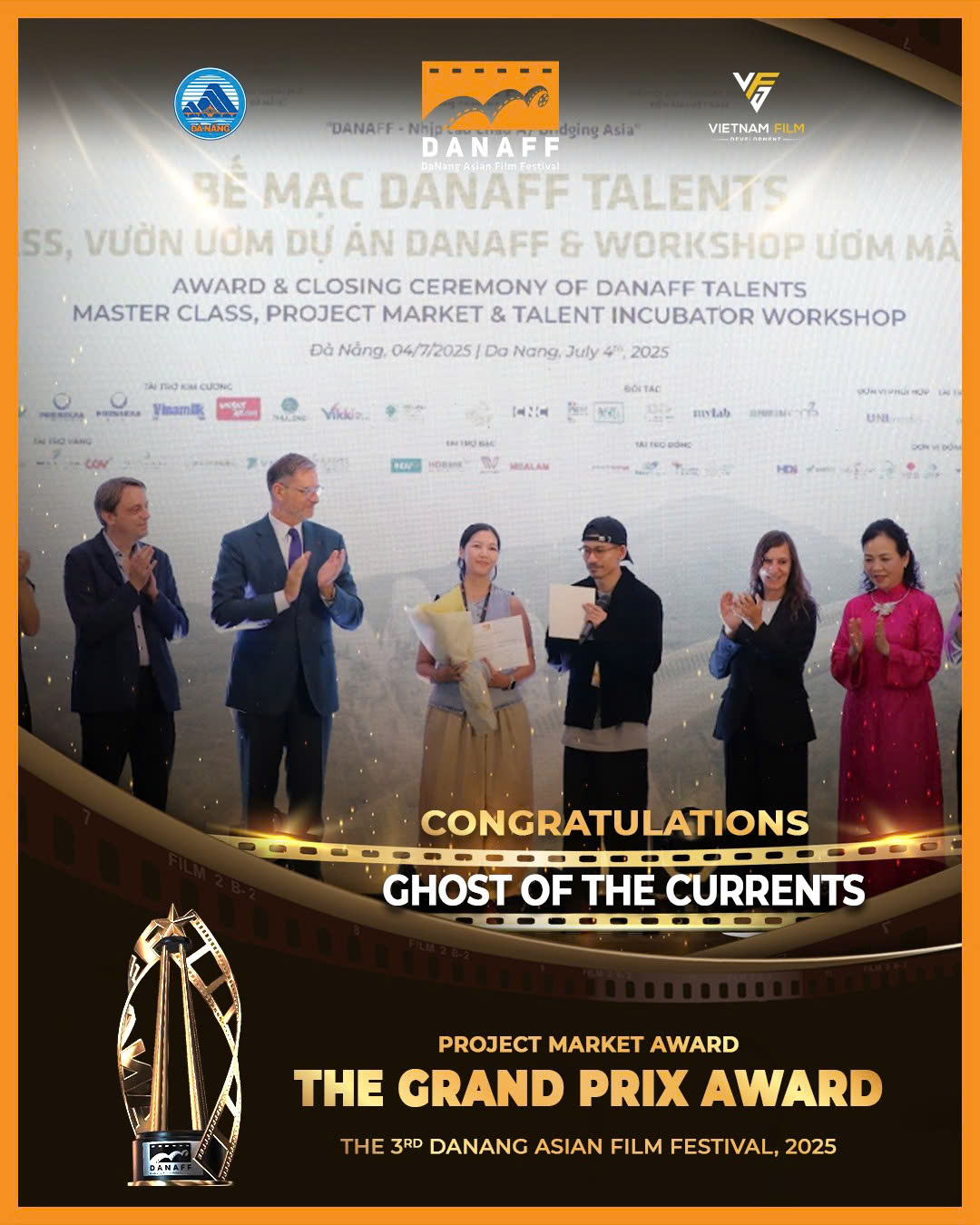
The 3rd Da Nang Asian Film Festival (DANAFF III)
The goal is to build a Vietnamese film industry with its own identity and reputation in Asia by 2030, producing high-quality works and world-class film talents.
This aligns with the content and values set forth in the cultural framework for Vietnam in 1943, based on fundamental principles of nationalisation, massification, and scientificisation.
Dr. Ngo Phuong Lan, Chairwoman of the Vietnam Film Development Association (VFDA)
According to Dr. Ngo Phuong Lan, Chairwoman of the Vietnam Film Development Association (VFDA), in the era of Industry 4.0, building a modern film industry is significant.
The cinema industry needs to establish its own brand, which must be associated with the nation’s cultural identity.
Furthermore, the cinema industry needs to nurture and cultivate young talents through careful selection, search, and development./.