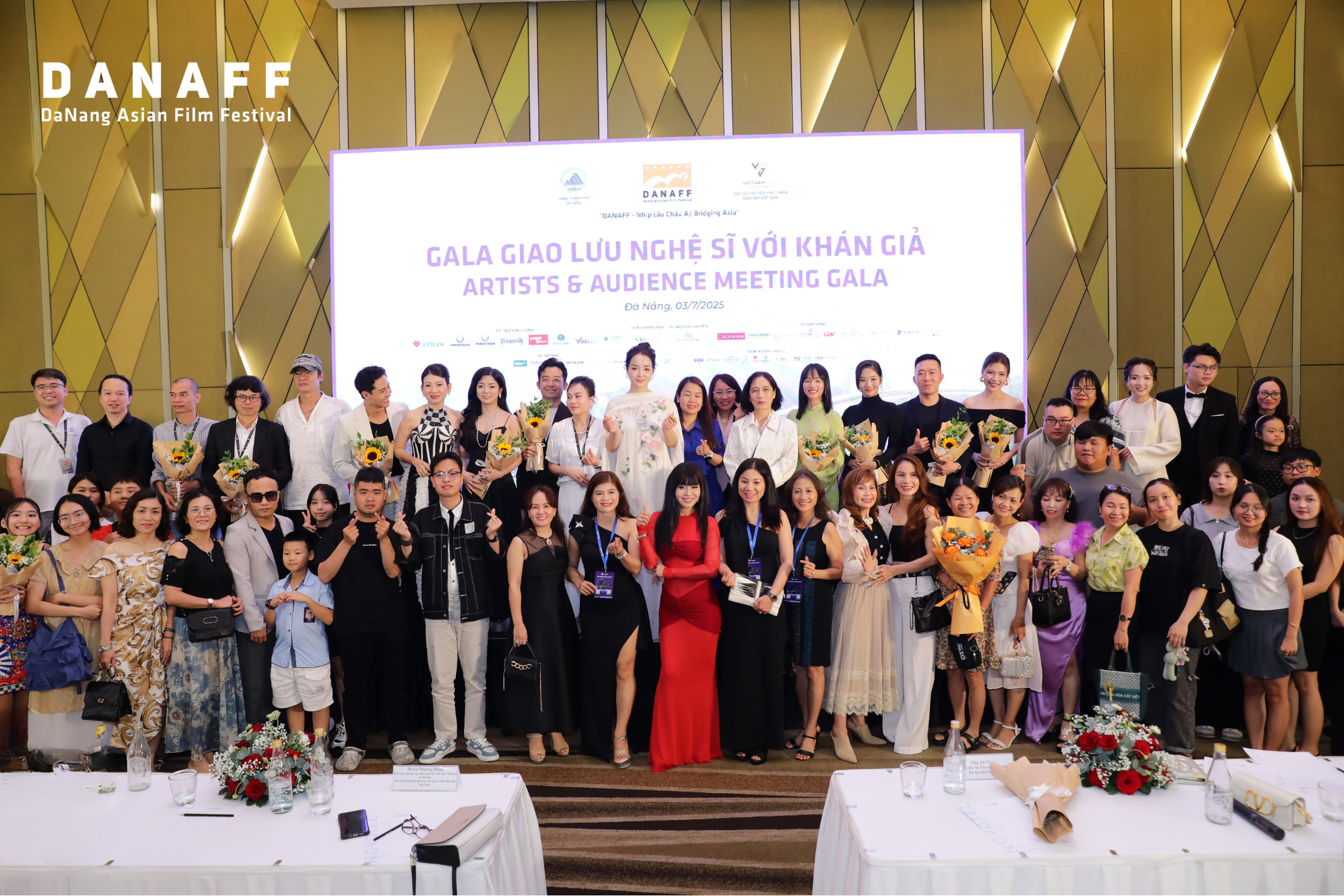
On December 8 at ParisTech Alumni (Paris), the roundtable “Strengthening bilateral cooperation between young Vietnamese and French filmmakers” took place as part of "Vietnam Film Week - The Journey of Light". The event was co-organized by the Vietnam Film Development Association (VFDA) and AVSE Global, under the patronage of the Embassy of Vietnam in France.
The event brought together directors, producers, cinema-school representatives, and experts from both Vietnam and France. Distinguished participants included:
From Vietnam:
Dr. Ngô Phương Lan – President of VFDA;
Producer Trần Thị Bích Ngọc (Glorious Ashes, winner of the Grand Prize at the Asian Project Market, Busan International Film Festival 2017; Best Film – Montgolfière d’Or, Three Continents Film Festival, Nantes, France);
Director Hà Lệ Diễm (Children of the Mist, shortlisted for the 2023 Oscar Documentary category);
Director Đàm Quang Trung (The Elephants on the Roadside, Best Director and Best Cinematography – Southeast Asian Short Film Competition, Singapore International Film Festival 2024).
From France:
Mr. Michel Plazanet – Deputy Director for International Affairs, CNC (French National Centre for Cinema);
Producer Christophe Bruncher – Founder of Ties That Bind, visiting lecturer at La Fémis;
Director Flavyen Dupont – Lecturer in Film Production & Post-Production, ISCOM Paris.
Vietnamese and French speakers engaged in an in-depth discussion on training and project development.
A rising generation of Vietnamese filmmakers
In recent years, young Vietnamese filmmakers have drawn significant attention on the global cinema map, winning major international awards and even entering Oscar shortlists. A dynamic new wave—marked by fresh perspectives, humanistic storytelling, and strong cultural identity—is helping shape the evolving profile of Vietnamese cinema.
Dr. Ngô Phương Lan, Chairwoman of VFDA, remarked:
“Vietnamese cinema is experiencing an extraordinary period of growth. The domestic box-office share of Vietnamese films rose to nearly 50% in 2024, compared to around 30% pre-COVID. In 2025, we expect this share to climb to 65–70%.”
Dr. Ngô Phương Lan, Chairwoman of the Vietnam Film Development Association (VFDA), delivered the opening remarks at the roundtable.
A need for greater support: Training – Project Development – International Connectivity
Despite the progress, young filmmakers still face challenges in securing opportunities for training, project development, and professional support—especially when aiming to reach international audiences.
During the discussion, several speakers highlighted practical difficulties. Director Hà Lệ Diễm noted that one of the biggest obstacles facing independent documentary filmmakers is post-production financing:
“Post-production funding is always a critical challenge—not just for me, but for many young documentary filmmakers in Vietnam.”
Director Hà Lệ Diễm presented the challenges faced in the post-production of documentary films
Accordingly, the roundtable centered on two key topics:
(1) Strengthening project-development capacity for young Vietnamese filmmakers
(2) Identifying conditions for expanding future Vietnam–France cooperation and co-production
The event also fostered international networking by connecting leading institutions such as CNC, La Fémis, and Institut Français (IF Paris), together with regional initiatives like DANAFF Talents—laying the groundwork for a support system for young filmmakers across Vietnam, Europe, and Asia.
Building a support network for emerging filmmakers
Producer Trần Thị Bích Ngọc, known for Glorious Ashes, emphasized that the core of co-production lies in mutual understanding: understanding each other’s personalities, aesthetic values, and shared passion for a project.
This is the foundation that enables Vietnamese filmmakers and international partners to find the right collaborators.
Producer Trần Thị Bích Ngọc shared her experience in developing independent film projects in Vietnam.
DANAFF Talents aims to develop a long-term strategy for building a support network that unites film-education institutions, producers, and international organizations—creating a platform for European producers to meet young Vietnamese filmmakers and explore future collaborations.
International speakers expanded on the mechanisms of support currently available.
Representing CNC, Mr. Michel Plazanet presented notable data on Vietnam’s strong performance in CNC funding programs:
“Of the 24 projects receiving CNC financial support this year, seven are from Vietnam. Typically, each country accounts for around 13% of selected projects, but Vietnam reached 29%—an impressive figure that demonstrates the strong competitiveness of Vietnamese projects.”
Mr. Michel Plazanet, representing CNC (France), presented an analysis of data related to the support for Vietnamese film projects.
Following CNC’s remarks, producer Christophe Bruncher elaborated on the requirements for a project to enter international co-production. He emphasized that before seeking foreign partners, a project must be firmly nurtured in its home country:
“To pursue international co-production, a project must first be developed with enough clarity and strength in its home environment. It doesn’t need to be 100% complete, but it must clearly demonstrate its vitality and potential. Co-production agreements are flexible, and both sides can shape the most suitable collaborative model for the project.”
Co-production opportunities fo Vietnamese cinema and creative capability of young Vietnamese filmmakers
From the perspective of ensuring the feasibility of international co-production, Mr. Christophe Bruncher also highlighted the favorable conditions currently emerging in the Vietnamese market:“Vietnamese cinema is experiencing remarkable growth: box-office revenues are rising, and it is encouraging to see more and more audiences returning to theaters. This is an excellent moment to collaborate with Vietnam—a country witnessing a
explosive growth of cinema, with many new production companies expanding rapidly, something that would have been unimaginable ten years ago.”
Producer Christophe Bruncher discussed models of co-production and talent development between Asia and Europe.
Complementing the discussion on production, director Flavyen Dupont offered an insightful observation on the creative potential between the two industries, especially after watching the opening film "Hijacked": “Vietnamese cinema is truly full of surprises. A France–Vietnam co-production could open countless creative directions—from horror and thriller to arthouse or commercial works… anything could become fertile ground for collaboration.”
Director Flavyen Dupont shared his views on the creative potential of France–Vietnam collaboration.
From the perspective of education and talent development, Professor Anna Lê Văn Ra, who has worked with many young Vietnamese filmmakers, expressed deep admiration for this new creative generation: “I have had the chance to work with several young Vietnamese directors, screenwriters, and cinematographers. What I value most about them is their creativity, dynamism, practicality, and strong sense of collaboration.”
Professor Anna Lê Văn Ra praised the creativity and collaborative spirit of young Vietnamese filmmakers.