The cultural industry is currently becoming one of the important pillars of the creative economy in many countries. In Vietnam, although the concept of the cultural industry is no longer unfamiliar, the process of realizing it still raises many issues ranging from awareness and institutions to markets and resources...
Looking at the practical realities of the film industry – a pioneering and highly promising field – it is clear to see the opportunities, challenges, and development path of the cultural industry in our country today.
A mirror reflecting the spirit of the Communist Party of Vietnam.
According to Dr. Ngo Phuong Lan, Chairwoman of the Vietnam Film Development Association (VFDA), the cultural industry is an industry based on creativity, knowledge, talent, and cultural values to produce, distribute, and consume cultural products. It is the process of "transforming culture into economic products," possessing both entertainment and educational value while generating profit and employment for society.
The core of the cultural industry lies in creativity, but that creativity cannot be separated from high technologies such as digitalization, artificial intelligence, and multi-platform communication – elements that are strongly influencing contemporary cultural life.
In Vietnam, the concept of a cultural industry began to emerge in the early 2000s, but its foundation was only truly laid when the "Cultural Development Strategy to 2020" was approved in 2009. Following this, Resolution No. 33-NQ/TW of the 11th Central Committee (2014) affirmed the requirement to "develop the cultural industry in conjunction with building and perfecting the cultural market."
In 2016, the Prime Minister approved the "Strategy for the Development of Vietnam's Cultural Industries to 2020, with a Vision to 2030," creating an important policy framework for cultural and artistic fields, including film.
Dr. Ngo Phuong Lan stated that discussing the film industry means discussing the organic relationship between film products and the film market. The film industry is composed of fundamental elements: creation; production of works (films); distribution and dissemination of films; market development to regenerate capital; and protection of creative achievements through copyright. However, for a long time, Vietnamese cinema was primarily viewed as a purely artistic industry. Only with the 2022 Film Law was cinema officially recognized as an industry – a turning point in terms of thinking and institutional framework.
In practice, Vietnam possesses many favorable conditions for developing its film industry. First and foremost is the strong growth of the market. While national film revenue was only about 2 million USD in 2000, it reached approximately 302 billion VND in 2009. In 2018, revenue surged to 3,556 billion VND, exceeding the target set for 2020 in the Strategy for the Development of Cultural Industries.
Prior to the Covid-19 pandemic, the market reached over 4,064 billion VND in 2019. Despite being severely impacted by the pandemic during the 2020-2022 period, the film market recovered quickly: In 2023, it reached approximately 3,700 billion VND, with Vietnamese films accounting for nearly 40%; in 2024, it reached 4,250 billion VND, with Vietnamese film revenue reaching 1,855 billion VND, equivalent to 44%.
In particular, 2025 saw very positive signals from war films released in theaters. "Red Rain" achieved record revenue of over 700 billion VND, becoming the highest-grossing Vietnamese film of all time as of September 2025. The film attracted over 8 million viewers, setting numerous new domestic box office records and affirming the commercial success potential of Vietnamese historical and war films.
The film also achieved impressive results, earning nearly 160 billion VND in revenue after only three weeks of release. Besides the market, Vietnamese cinema also has advantages in a relatively complete legal system; a rich and diverse source of natural settings; historical depth and cultural identity; a young and dynamic workforce; and reasonable production costs... These are important factors in attracting investment and expanding international cooperation in film production.
Vietnamese films still face a "gap" in the international market.
However, according to Dr. Ngo Phuong Lan, the Vietnamese film industry is still facing many difficulties. Although the legal framework for cinema is being gradually improved, there are still aspects that need further review, supplementation, and concretization to meet the industry's development requirements in the new context. In addition, financial resources for cinema are currently modest, and a Film Development Support Fund has not yet been established.
The domestic film distribution system is weak, with domestic businesses holding only about 40% of the cinema market share, putting Vietnamese films at a significant disadvantage when competing with imported films. The supply of high-quality human resources is insufficient, while audience tastes remain unstable, hindering the diversification of film genres.
Compared to the targets set in Vietnam's Cultural Industries Development Strategy, domestic film revenue has seen impressive growth and even exceeded the 2020 target as early as 2018. However, conversely, the goal of exporting Vietnamese films to international markets remains a significant gap. In reality, bringing films to international markets is proving challenging.
In recent years, Vietnam's film exports have been primarily driven by small-scale, fragmented private companies lacking systematic support from state management agencies. This is a core weakness in the development of the film industry, because a film industry is only truly complete when its products not only serve the domestic market but also participate in the global value chain. Therefore, Vietnam needs to urgently develop a systematic, long-term, and focused strategy for promoting its films to the world .
This strategy needs to be implemented synchronously at three levels. First, it involves participating in Vietnamese Film Weeks, Vietnamese Culture Days, and cultural and artistic events within the framework of agreements, treaties, and foreign relations. The second level is participation in prestigious international film festivals, where Vietnamese films have the opportunity to reach international professionals, distributors, and the public. The selected works should possess artistic value, demonstrate innovative creativity, and reflect the unique cinematic personality and cultural depth of Vietnam.
This is not only a path to affirming the quality of national cinema but also an important stepping stone for Vietnamese films to access the global market. At a higher level, it involves gradually establishing a Vietnamese film market abroad for films with commercial and humanistic value. This requires the proactive participation of the State in supporting promotion and connection, while encouraging domestic and foreign film businesses to cooperate in distributing and popularizing Vietnamese films in various forms.
Furthermore, Dr. Ngo Phuong Lan emphasized that the State needs mechanisms to encourage organizations, individuals, and film businesses to sell Vietnamese films for distribution and screening abroad, while also paying attention to exploiting Vietnamese films in the international market not only during their theatrical release but also afterward. Developing related products, exploiting copyrights on digital platforms, television, tourism, or consumer culture will contribute to optimizing the economic and cultural value of cinematic works.
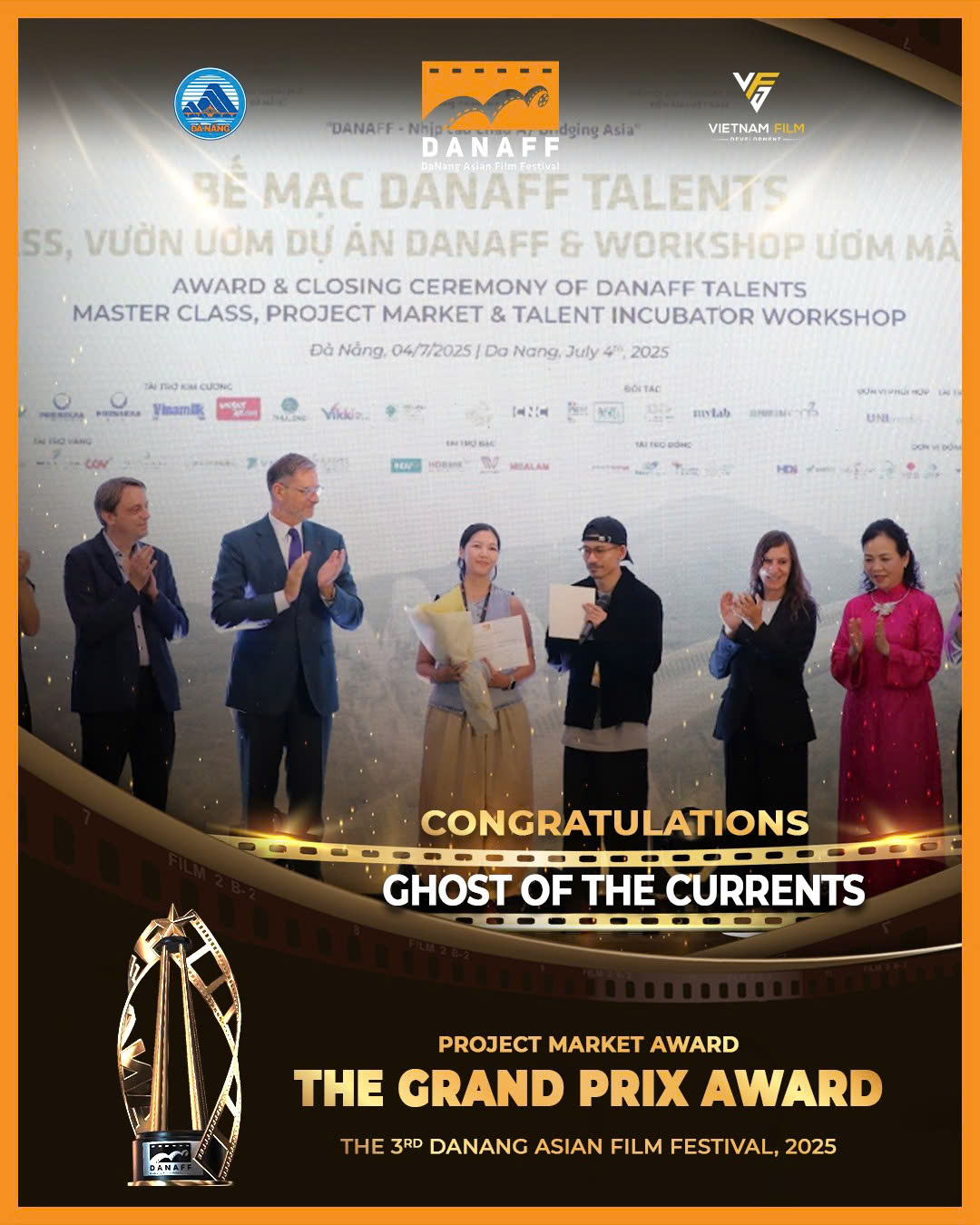
In the long-term strategic view, building the brand of Vietnamese cinema needs to be placed within the overall national strategy for cultural promotion as a form of "soft power." Organizing prestigious and professional international film festivals in Vietnam not only creates a platform for domestic filmmakers but also contributes to positioning the image of Vietnamese cinema on the regional and global film map.
Along with commercial films, supporting art films and independent films to participate in international film forums is also a way to affirm the quality, depth, and identity of Vietnamese cinema. At the same time, it is necessary to strengthen the connection between cinema and tourism, culture, and the economy, considering film locations as tourism resources, and combining the promotion of Vietnamese cuisine, costumes, architecture, and lifestyle through cinema.
The film industry is not merely an entertainment industry, but also a crucial foundation of the cultural industry, contributing to economic development, protecting and disseminating cultural values, and enhancing national prestige. Looking at the film industry, many lessons can be drawn for other cultural fields: For the cultural industry to develop, a comprehensive strategy is needed, placing art, technology, and economics as its three pillars.