Resolution No. 80 and the spirit of the 14th Party Congress demonstrate a significant shift in the Party's strategic understanding of culture.
Culture is no longer viewed primarily from the perspective of preservation or spiritual activities, but rather placed in an organic relationship with the economy , the market, and cultural industries. Cultural products are considered a resource for development, an important component of national "soft power," thereby opening up new development opportunities for cultural industries.
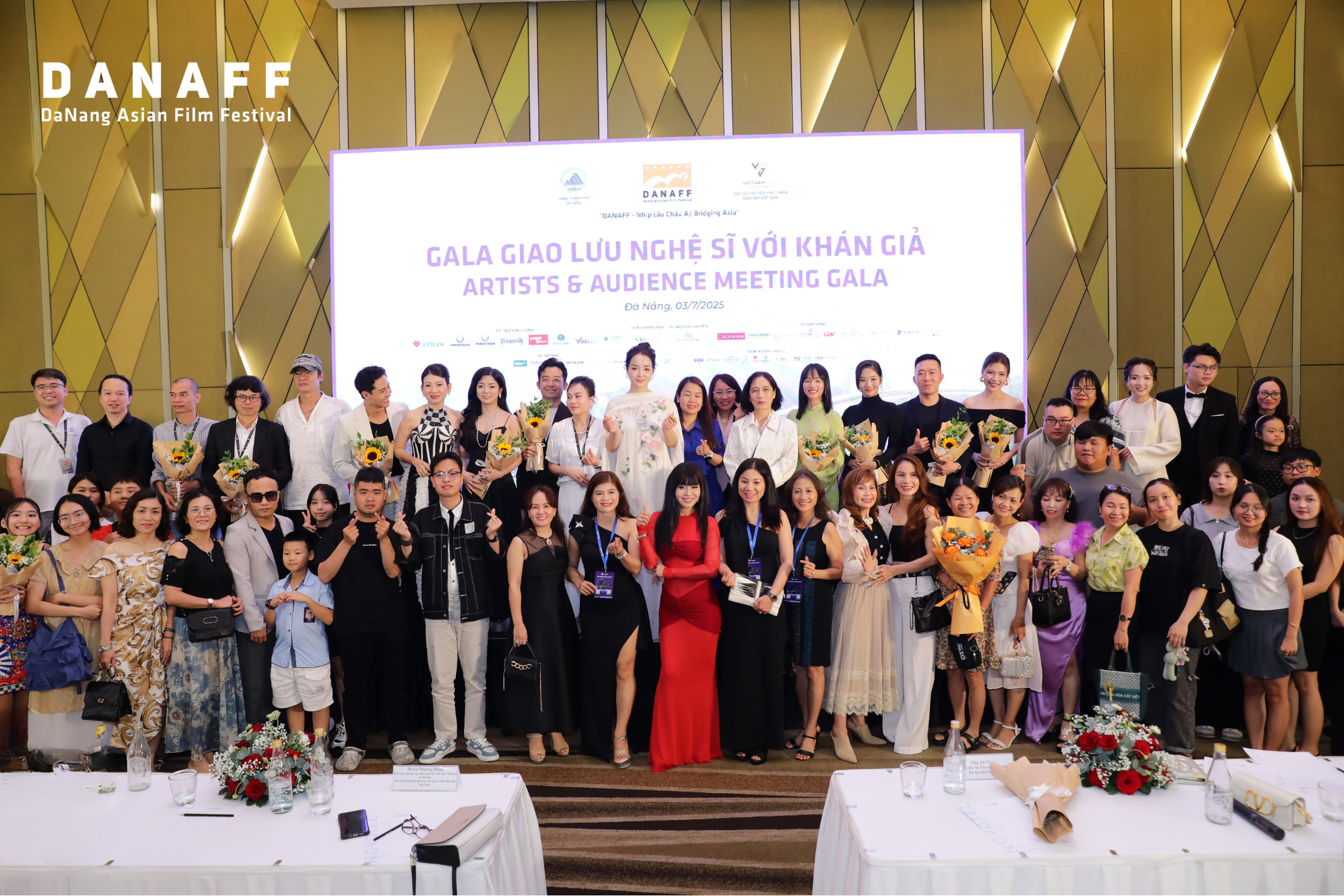
Pressing the button to launch the 4th Da Nang Asian Film Festival - Photo: DAU DUNG
This is an important political and ideological foundation for cultural sectors, including film, to boldly innovate their thinking, shifting from fragmented, short-term approaches to a sustainable development strategy.
In particular, the resolution lays the groundwork for promoting socialization, attracting non-state resources, and strengthening public-private partnerships, thereby enhancing investment efficiency and the competitiveness of cultural products.
The strategic aspect of the resolution also places cultural development within the context of international integration, emphasizing proactive integration. This is also the direction that I and the Vietnam Film Development Association (VFDA) are striving to pursue.
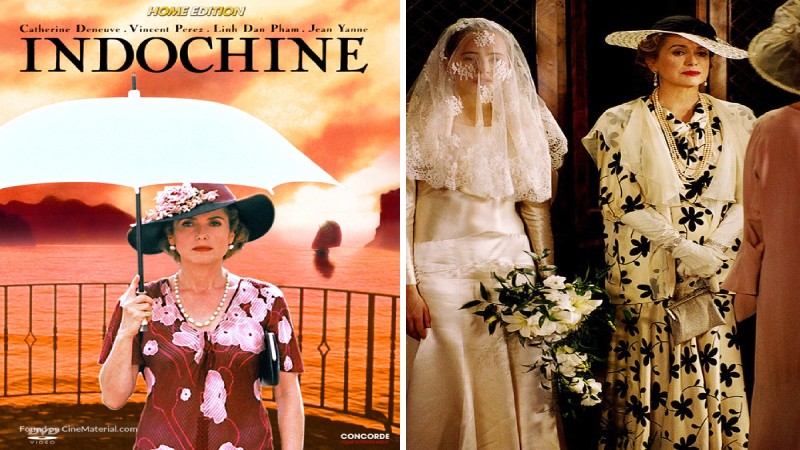
Scene from the movie Red Rain
In the field of cinema, this orientation helps to clearly affirm the role of films in telling the story of Vietnam to the world, contributing to building the national image, and at the same time creating motivation for targeted and strategic investment, linking artistic creativity with social and economic effectiveness.
Therefore, if we are not proactive, we cannot seize opportunities for cooperation to convincingly introduce Vietnam and its people in general, and Vietnamese cinema in particular, to the world, and bring the best of world culture and cinema to the Vietnamese public.
Resolution 80 demonstrated the Party's strategic, long-term, and timely vision for the revival and development of Vietnamese culture.
I am very pleased that the resolution has set very specific goals and solutions, and to realize them in real life, it emphasizes the decisive factors of people and institutions. We need a team of cultural management officials with innovative thinking, a deep understanding of practical realities, and sufficient capacity to implement policies.
Simultaneously, it is necessary to quickly concretize the resolution with practical and feasible action programs and plans; prioritizing the completion of the legal framework for cultural industries and investing in the development of high-quality creative human resources.
However, in order to develop culture and link it with the development of the cultural industry and the market, appropriate public-private cooperation mechanisms are needed, in accordance with the principles of sustainable development.
Currently, public-private partnerships are a major bottleneck; in the film industry, this is most evident in the collaboration between distributors/cinemas and film producers.
In terms of mechanisms, policies need to be further refined towards transparency, efficiency, and predictability, building confidence among domestic and foreign investors.
Dr. Ngo Phuong Lan
Tax incentives, the establishment of film development support funds, policies to attract international film crews, and copyright protection are key factors in unlocking social resources. In addition, it is necessary to focus on investing in human resources aligned with international practices and standards.
The goal is to establish 5-10 national brands in the cultural industry by 2030, with cinema as a pillar, requiring strong innovation in thinking, methods, and implementation mechanisms.
Cinema needs to be viewed and developed as an ecosystem, not just limited to producing individual films.
Building national film brands is not just about revenue or awards, but also about identity, artistic quality, and the ability to spread Vietnamese culture to the world.
The formation and development of the Da Nang Asian Film Festival (DANAFF) is a concrete model that contributes to realizing the goals of Resolution 80. With the spirit of "Bridging Asia to the World" instead of "Bridging Asia" in the previous three seasons, DANAFF is not just a film event but aims to build a cultural and cinematic brand that attracts film industries worldwide, thereby enhancing the position of Vietnamese cinema, promoting international cooperation, developing the market, and nurturing creative human resources.
When brands like DANAFF are clearly positioned, receive stable investment, and develop sustainably, Vietnamese cinema will have a stronger foundation to become one of the pillars of the cultural industry, making a practical contribution to the overall development goals of the country.